

OnlyFans operates on a psychological paradox where removing the price tag often increases total spending. The platform’s free pages exploit behavioral economics principles that make zero-dollar entry feel like a rational choice while setting up conditions for unpredictable expenditure. Understanding these mechanisms helps users navigate the platform with awareness rather than impulse.
BestOnlyFans analyzes this dynamic through ranking methodology that categorizes pages by monetization structure rather than content type. Their data shows free pages generate comparable or higher revenue per user than fixed subscriptions through strategic PPV deployment. This article examines the pricing psychology behind that shift.
The $0 subscription model represents a deliberate departure from traditional media economics. Where conventional subscriptions trade predictable revenue for guaranteed access, free pages sacrifice upfront income for frictionless entry and variable extraction.

The Appeal of Zero-Dollar Entry
Zero-dollar pricing removes the psychological barrier of commitment. Users who hesitate at a $9.99 monthly charge face no friction when joining for free. This elimination of upfront cost triggers what behavioral economists call the “zero-risk bias” — the tendency to prefer options with no apparent downside, even when hidden costs exist.
Traditional retail free samples offer limited quantities at fixed locations. OnlyFans free pages provide unlimited duration with continuous monetization potential. The model resembles freemium software more than physical sampling, where the “free” tier serves as a funnel toward paid features.
Unlike software freemium, however, the platform lacks hard paywalls that force upgrade decisions. Users remain in perpetual free status while encountering intermittent purchase opportunities. This creates uncertainty that fixed subscriptions eliminate. Free pages generate income through five alternative mechanisms that aggregate to subscription-equivalent or higher totals. These revenue streams replace the predictable monthly charge with variable, event-based spending.
How PPV Messages Replace Subscription Revenue
- PPV messages to inbox requiring unlock fees up to $50
- Locked feed posts with per-item pricing
- Tip menus for specific content categories
- Paid livestream access for exclusive broadcasts
- Custom content requests at negotiated rates
The structural replacement shifts risk from creator to consumer. Fixed subscriptions guarantee creator income regardless of engagement; PPV models transfer that certainty to the creator through volume while exposing users to unpredictable costs.
BestOnlyFans methodology tracks this divergence by analyzing price distributions across ranked pages. Their data indicates that free-page users who engage with PPV content average higher monthly expenditure than mid-tier subscription holders, though with greater variance.

Platform mechanics reinforce this shift. The 20% platform fee applies identically to subscriptions and PPV, but the psychological presentation differs. A $10 subscription feels like a single decision; ten $1 PPV purchases feel like ten separate choices, each with lower perceived magnitude.
Common Spending Patterns on Free Pages
Intermittent reinforcement drives unpredictable expenditure patterns on free pages. Variable reward schedules — where message notifications sometimes contain free content and sometimes require payment — generate engagement behaviors similar to those studied in behavioral psychology literature.
Fixed monthly costs enable budgeting through simple arithmetic. Variable PPV spending resists this predictability. Users cannot calculate monthly totals in advance because content availability and pricing vary by creator, time, and individual message.
Notification psychology amplifies this uncertainty. Each inbox alert creates a micro-decision point with emotional stakes: the possibility of desirable content versus the certainty of another expense. This differs from subscription models where access is already secured.
Recognizing Pricing Anchors in PPV Design
Creators employ anchoring tactics to establish reference points that make subsequent prices feel reasonable. Initial messages at $25 or higher set psychological benchmarks; subsequent $8-12 offerings appear moderate by comparison despite exceeding typical subscription rates.
- Anchor pricing: establishing high initial reference points
- Scarcity messaging: limited-time availability claims
- Social proof in sales copy: implied demand from other subscribers
- Bundled “deals” that obscure per-item costs through packaging
The platform’s lack of discovery feed intensifies these effects. Without browsing alternatives, users evaluate prices against memory rather than market comparison. This isolation from competitive pricing removes external anchors that might constrain spending.

When Free Pages Cost More Than Subscriptions
Mathematical comparison reveals scenarios where zero-dollar entry produces higher monthly totals than fixed subscriptions. The variance depends on engagement patterns that users rarely anticipate when joining.
- Light PPV user: under $5 monthly, below minimum subscription cost
- Moderate user: $15-25 monthly, matching typical subscription range
- Heavy user: exceeding $50 monthly, substantially above standard fees
These scenarios assume typical pricing where PPV messages range $3-$15 and occasional higher-priced content appears. The moderate user profile — representing regular but not excessive engagement — often surprises participants who expected free entry to constrain spending.
| Monthly Scenario | Free Page Total | Paid Page Equivalent |
|---|---|---|
| Light use (minimal PPV) | $0-5 | $4.99-15 |
| Moderate use (regular PPV) | $15-35 | $4.99-15 |
| Heavy use (frequent PPV) | $50-100+ | $4.99-15 |
| Impulse-driven use | Highly variable | Fixed monthly |
| Disciplined budget adherence | Matches preset limit | Automatic constraint |
The critical variable is impulse control. Users who set and maintain strict PPV budgets can achieve cost savings; those who respond to each notification without pre-commitment often exceed subscription equivalents.
Concrete tip: Before joining any free page, set a specific monthly PPV cap in writing. The platform’s wallet feature can enforce this by limiting deposits, but psychological pre-commitment proves more reliable than relying on willpower at the moment of purchase.
Budgeting Tools for Zero-Dollar Browsing
Four categories of tools help manage spending on free pages. Platform features provide baseline control; personal systems add enforcement layers.
- Wallet deposit limits: restricting available platform funds
- Card spending caps: bank-level transaction controls
- Manual tracking spreadsheets: recording purchases against budgets
- Browser extensions for expense monitoring: real-time spending alerts
Pre-commitment devices outperform reactive restraint. Setting wallet deposits before browsing eliminates decision fatigue during actual use. This matches behavioral research showing that people maintain limits better when choices are constrained in advance.

Card verification holds of $0.10, refunded within days, provide minimal friction for initial setup but no ongoing spending control. Users serious about budgeting should implement multiple constraint layers rather than relying on platform defaults.

Comparing Value Perception Across Page Types
Identical content generates different satisfaction levels depending on acquisition context. Research on payment psychology indicates that free acquisition reduces perceived value while paid access increases appreciation — paradoxically, even when total expenditure exceeds alternatives.
| Dimension | Free Page Experience | Paid Subscription Experience |
|---|---|---|
| Access anticipation | Unpredictable, notification-driven | Scheduled, expectation-based |
| Content satisfaction | Variable with price paid | Relatively stable |
| Spending anxiety | Recurrent at each purchase | Front-loaded, then absent |
| Creator relationship perception | Transactional per interaction | Ongoing membership frame |
| Cancellation ease | No formal process needed | Explicit termination required |
The satisfaction differential affects retention patterns. Subscription users develop habituation and loyalty; free-page users experience continuous re-evaluation at each purchase point. Neither model guarantees superior outcomes, but they produce distinct psychological trajectories.
BestOnlyFans ranking data suggests that satisfaction metrics correlate more strongly with expectation alignment than with absolute spending. Users who accurately anticipate their engagement patterns report higher satisfaction regardless of model choice.
Making Informed Choices Between Models
Optimal model selection depends on individual consumption profiles rather than universal superiority. Five subscriber archetypes map to different recommendations.
- Occasional viewer: benefits from free pages with strict PPV limits
- Variety seeker: multiple low-cost subscriptions preferred to scattered PPV
- Single-creator loyalist: subscription provides better value and relationship
- Budget-strict user: subscription’s predictability enables planning
- Impulse-prone browser: subscription constraints protect against overspending
Self-awareness proves more valuable than model comparison. Users who accurately assess their own impulse control and engagement patterns can select appropriately; those who misestimate tend toward regret regardless of choice.
The onlyfans free fitness category demonstrates application of these principles to specific content verticals, where predictable subscription structures often outperform variable PPV for users seeking systematic programming rather than novelty.

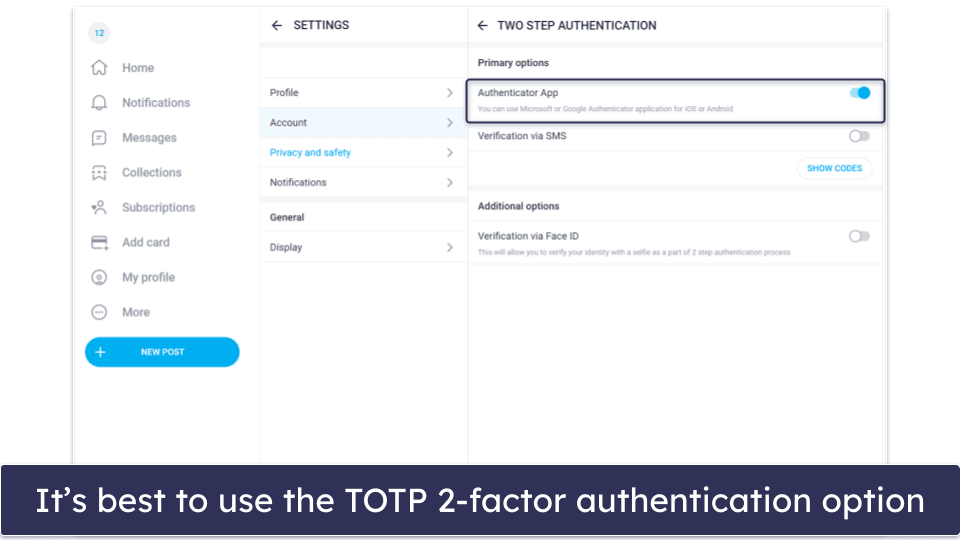
Account security considerations apply equally across models. Two-step authentication, spending notifications, and regular access reviews help maintain control regardless of monetization structure.
FAQ
Why does free entry make me spend more than a subscription would?
Intermittent reinforcement removes the salience of cumulative spending. Each individual PPV purchase feels small relative to the “savings” of free entry, while subscription costs remain visible as a single line item. The psychological separation of purchases from total expenditure obscures the aggregate.
How can I tell if a free page’s PPV prices are reasonable before I join?
The platform provides no preview of PPV pricing structures. External ranking sites sometimes aggregate this data, but individual creator practices vary. Your only reliable indicator is historical spending pattern analysis after limited initial engagement. Set a low exploration budget and evaluate before deeper commitment.
Does the platform warn me before I exceed my usual spending?
OnlyFans does not provide spending alerts based on historical patterns. The wallet feature shows remaining balance, but no comparative warnings about monthly totals versus previous periods. Users must implement personal tracking systems for this functionality.
What happens to my access if I stop buying PPV on a free page?
Free page access continues indefinitely at the zero-dollar level. Previously unlocked content remains available; new locked content stays inaccessible unless purchased. Unlike subscription cancellation, which severs access at period end, free pages impose no penalty for purchase cessation beyond opportunity cost of missed content.


