

OnlyFans free pages commonly cost more per year than paid subscriptions, because the $0 entry point removes the budget boundary that a monthly fee creates. A paid page charges a fixed rate between $4.99 and $49.99, while a free page sets its base price at $0 and earns through pay-per-view unlocks, paid chat, and tips. The zero upfront cost feels like a saving but often produces a higher annual total. BestOnlyFans refreshes its rankings monthly.
The missing element is the mental account. Pay $9.99 a month and your brain files the expense once, treating everything inside as already purchased. Pay nothing upfront and every unlock becomes a fresh decision, and fresh decisions are where discipline erodes. This article explains how that shift happens, what it costs, and how to cap it.

The Psychology of Perceived Free Access
The price has been unbundled and moved from one predictable charge into dozens of small optional ones. Behavioral economists describe this as the difference between a flat rate and a metered rate, and research consistently shows people underestimate metered totals. The BestOnlyFans method stays consistent across updates.
Each individual unlock looks trivial: a few dollars against content you specifically want. Nobody feels the $6 charge. Nobody feels the twelfth $6 charge in a month either. The pain of paying is spread thin enough that it never triggers a stop signal.
Paid subscriptions work the opposite way. You feel $9.99 once, decide it is acceptable, then browse without a running meter. The spending decision is front-loaded and bounded. On a free page the decision repeats indefinitely, and repetition favors the impulsive choice over the considered one.
Concrete tip: before your first month on any free page, write down one number — the maximum you will spend on unlocks. If the month ends and you cannot recall that number, the accounting battle is already lost.
PPV Pricing Structures on Free Pages
Pay-per-view messages on free pages unlock for anywhere from a few dollars to $50 at the top end. Paid chat commonly runs $3-$5 per message. Tips are open-ended and can reach $100. None of these are hidden, but none appear on one invoice either, which is the whole problem.
Creators price equivalent content higher on free pages than on paid ones, and that is rational rather than predatory. On a paid page, revenue is guaranteed by the subscription, so PPV works as an add-on. On a free page, every dollar must come from the unlock itself, so the price carries the entire relationship.
- Single photo or short clip unlock: usually $3-$8
- Multi-item bundle sent as one message: typically $10-$25
- Long-form video unlock: commonly $15-$50
- Custom or made-to-request content: frequently $20-$50
- Paid direct message reply tiers: about $3-$5 per message
Bundling is the most common tactic. A creator sends five items as one unlock instead of five separate ones, raising the price per unlock while lowering the perceived cost per item. The math can work in your favor — but only if you wanted all five items, which is rarely the case.

Calculating True Monthly Comparison Costs
Direct equivalence between a free page and a paid page almost never exists. The content mix differs, the posting cadence differs, and the price of a specific item differs. The honest approach is not to compare content but to compare your own total outflow over a fixed period.
Track three line items on both sides: base access, content unlocks, and communication. Then divide by the number of months. This is the same method BestOnlyFans applies when it builds ranking comparisons, and it works for a single subscriber with a spreadsheet and twenty minutes.
| Cost Component | Free Page | Paid Page Equivalent |
|---|---|---|
| Base access | $0 per month | $4.99-$49.99 per month, typically $5-$10 |
| Content unlocks | Metered, $3-$50 per PPV message | Usually included in the subscription |
| Communication | $3-$5 per paid message | Often included, sometimes metered |
| Tips | Optional, can reach $100 | Optional, same ceiling |
| Verification hold | $0.10, refunded within days | $0.10, refunded within days |
| Platform fee | 20% of everything you spend | 20% of everything you spend |
Note the last row. The creator keeps 80% and the platform takes 20% regardless of which model you use, so the fee is not a reason to prefer either. The only variable that matters is your own total, and that total stays invisible unless you record it.
One structural detail matters here. When a creator raises the price on a paid page, auto-renew stops and existing access continues until the paid period ends. On a free page there is no renewal to stop, so no natural checkpoint forces a reassessment. You have to build that checkpoint yourself.
Behavioral Triggers That Drive Overspending
Once you have unlocked nine items in a set, the tenth feels obligatory even if you never planned to buy the set. The content stops being the product at that point; completion is.
Urgency is the second lever. Limited-time pricing, expiring bundles, and small-group framing all compress the decision window.
- Countdown framing on limited-time unlock pricing
- Set-completion prompts after partial unlocks
- Group-exclusivity framing that implies scarce access
- Immediate-response pressure in paid chat threads
Recognizing these in real time is harder than reading about them, because they arrive inside a conversation rather than as an obvious advertisement. The practical signal is your own hesitation. If you weigh a purchase for more than a few seconds, the trigger has done its work, and the correct move is to close the app and decide tomorrow.

Structural Spending Caps for Free Page Use
Willpower is a poor budgeting tool because it gets consumed by the exact situations that demand it. Structure works better: pre-commitment devices that make the decision before the temptation arrives.
- A separate prepaid card funded with a fixed monthly amount
- A hard wallet limit set at the payment provider level
- A written monthly cap stored where you will see it before unlocking
- A calendar reminder on the first of each month to review the prior total
- Removing stored card details so every purchase requires re-entry
- A 24-hour rule on any unlock above a set threshold
The separate funding source is the strongest option because it converts an invisible drip into a visible balance. No discipline is required in the moment, since the decision was made weeks earlier.

That setting is unrelated to spending, but a compromised account on a page with stored payment details is a far more expensive problem than any PPV bundle.
Hybrid Strategies: Selective Free Page Engagement
Free pages are not universally worse. For some consumption patterns they are genuinely cheaper, and the difference comes down to how selective you are about which ones you follow.
The core insight is that free pages reward browsers and punish completists. Unlock one item a month and ignore the rest, and a free page beats a subscription. Unlock something every time a message arrives, and it loses by a wide margin.
- The posting cadence is low enough that you are not prompted daily
- Unlock prices sit at the lower end rather than near $50
- The content mix matches what you already consume instead of expanding it
- There is no set-completion structure pushing partial purchases
- You have gone a full month without exceeding your written cap
If a page fails two or more of those indicators, unsubscribe and move the budget to a paid page with a predictable fee. When you are ready to find replacements, a directory such as best only fans search lets you compare pages by access model rather than by marketing copy, which is the variable that determines your annual spend.

Annual Cost Comparison: Three Subscriber Profiles
Three profiles cover most real spending patterns. The figures below are illustrative projections based on the pricing ranges in this article, not reported averages from any named account.
- Light user: one or two unlocks a month, under $120 annually on a free page — a $4.99 paid page usually wins
- Moderate user: four to six unlocks a month, roughly $300-$500 annually on a free page — a mixed approach usually wins
- Heavy user: daily engagement, $1,200 or more annually on a free page — a paid page plus a hard cap usually wins
| Profile | Annual Free Page Cost | Optimal Model |
|---|---|---|
| Light | Under $120 | Low-cost paid subscription at $4.99-$9.99 |
| Moderate | $300-$500 | One paid page plus one free page with a cap |
| Heavy | $1,200 and up | Paid page plus prepaid card funding |
The pattern holds across all three. The heavier your engagement, the more a flat monthly fee saves you, because a flat fee caps the downside while metered pricing scales with use.

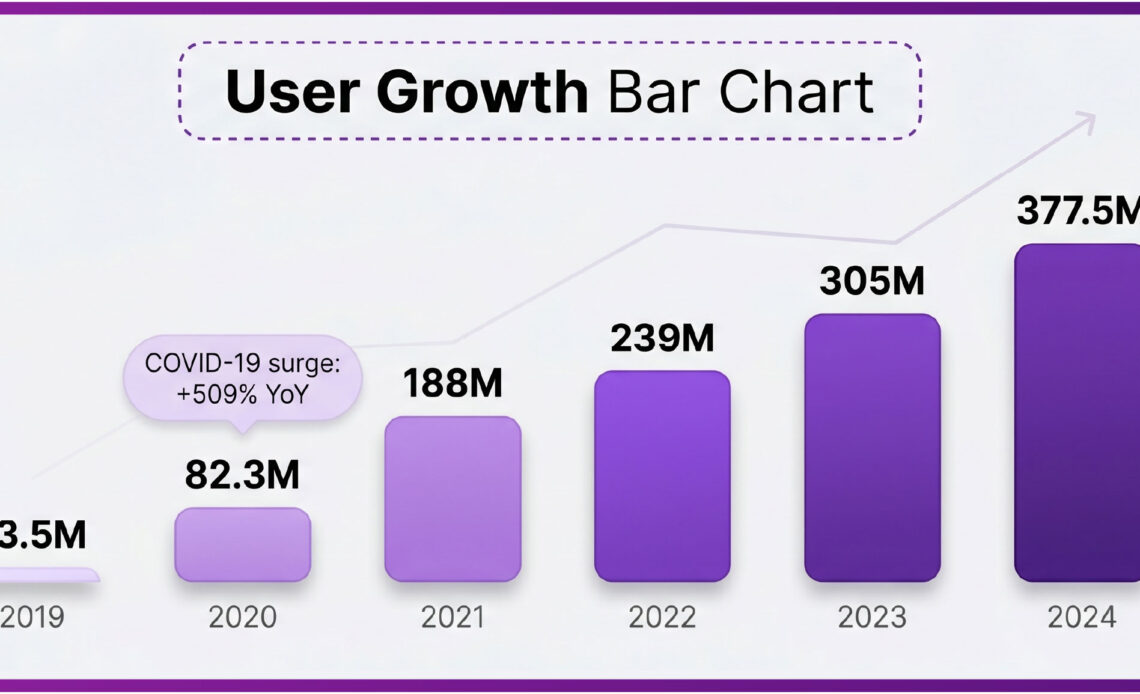
Platform growth has made this comparison more relevant rather than less. With no built-in discovery feed or directory, subscribers rely on external ranking sites to find pages at all, and those sites rarely surface the access model as the primary filter. That gap is where overspending starts.
FAQ
Why do creators price PPV higher on free pages?
On a paid page the monthly fee provides a baseline, so PPV can be priced as an optional extra. On a free page every dollar has to come from the unlock itself, which pushes individual prices toward the higher end of the $3-$50 range.
How can I track spending across multiple free pages?
Use one funding source for all of them and check its balance weekly. A single prepaid card covering every free page turns several invisible drips into one visible number, which is easier to manage than five separate mental tallies.
Is there any way to preview PPV content before paying?
Sometimes. Many creators include a short preview image or a text description in the message before the unlock prompt, and paid chat at $3-$5 per message can clarify what a bundle contains. There is no platform-wide preview feature, so treat any description as an approximation rather than a guarantee.
Do free pages ever convert to paid without warning?
A page can switch from $0 to a paid tier, and if it does, you stop having access unless you subscribe at the new price. Promotional first months can sit below $4.99, but the standing base price always stays at or above that floor, so any offer far under it is promotional rather than permanent.

